
Smart sensors: the key to energy-efficient buildings
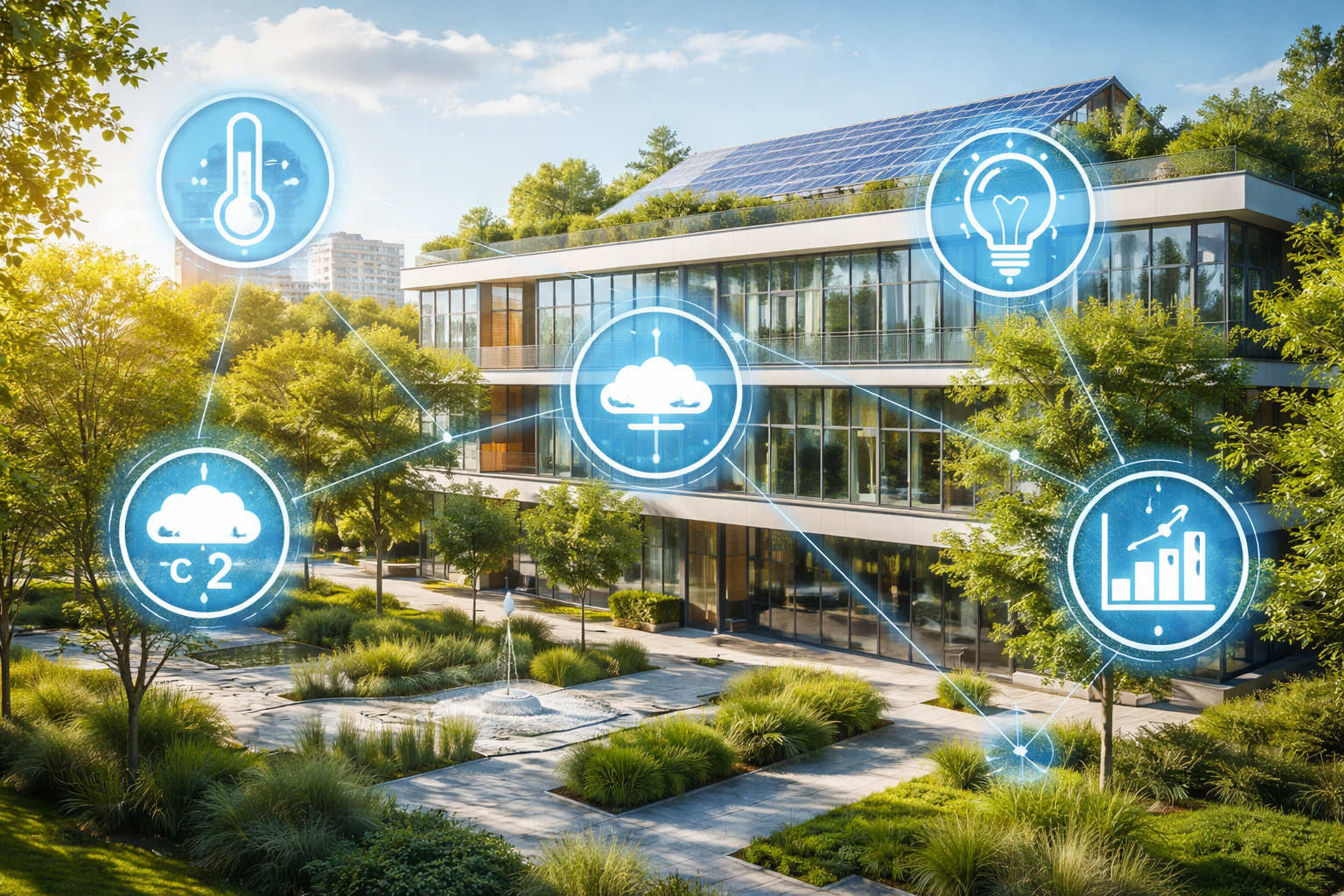
Energy efficiency has become one of the great challenges of the construction sector, not only in industrialized construction.
In major European cities, buildings are responsible for approximately 40% of energy consumption and a significant part of CO₂ emissions. In this context, digitalization opens new opportunities to optimize the energy behavior of buildings.
One of the technologies with the greatest potential is the use of smart sensors, devices capable of collecting real-time information about how a building is used and how it behaves energetically.
Buildings that “understand” what happens at every moment
Sensors allow monitoring key variables such as temperature, space occupancy, air quality or natural light. Thanks to this data, building systems can automatically adjust their operation.
For example, a presence sensor can detect if a room is empty and reduce air conditioning or turn off lighting. Similarly, CO₂ sensors can activate ventilation when air quality decreases, while natural light sensors adjust artificial lighting to make the most of exterior light.
In this way, the building stops operating with fixed configurations and begins to adapt to real usage conditions.
Most commonly used sensor types
Different types of sensors are used in smart buildings to improve energy efficiency:
-
Occupancy or motion sensors
Allow optimizing the use of lighting and air conditioning according to the presence of people.
-
Temperature and humidity sensors
Facilitate automatic regulation of heating, cooling and ventilation systems.
-
CO₂ and air quality sensors
Improve ventilation and indoor comfort, while reducing unnecessary consumption.
-
Natural light sensors
Adjust the intensity of artificial lighting based on available exterior light.
-
Energy consumption sensors
Allow monitoring electrical, thermal or water consumption to detect inefficiencies and optimize building performance.
The foundation of smart buildings
Sensors are a fundamental piece of so-called smart buildings. These buildings integrate digital systems capable of collecting data, analyzing it and making automatic decisions to improve their operation.
In many cases, these systems are connected to energy management platforms or building management systems (BMS), which centralize information and allow optimizing building behavior over time.
Additionally, data analysis allows detecting consumption patterns, anticipating problems and improving maintenance strategies.
Sensors and industrialized construction
Industrialized construction offers a particularly interesting opportunity to integrate sensors from the design and manufacturing process itself.
By manufacturing components or modules in industrial environments, it is possible to incorporate sensors directly into construction elements such as facades, installations or prefabricated modules. This facilitates the creation of buildings prepared for energy monitoring from their origin.
The combination of industrialization, digitalization and energy monitoring opens the door to more efficient, more sustainable buildings that are easy to manage throughout their entire life cycle.
Towards buildings that “learn”
The next step in this evolution is the integration of artificial intelligence and advanced data analysis. Thanks to these technologies, buildings will be able to learn from their own operation and anticipate their energy needs.
This will allow further optimizing consumption, improving user comfort and advancing towards a more efficient and resilient building stock.
In this context, sensors are not just measurement tools, but a key infrastructure for the transition towards intelligent and energetically responsible buildings.